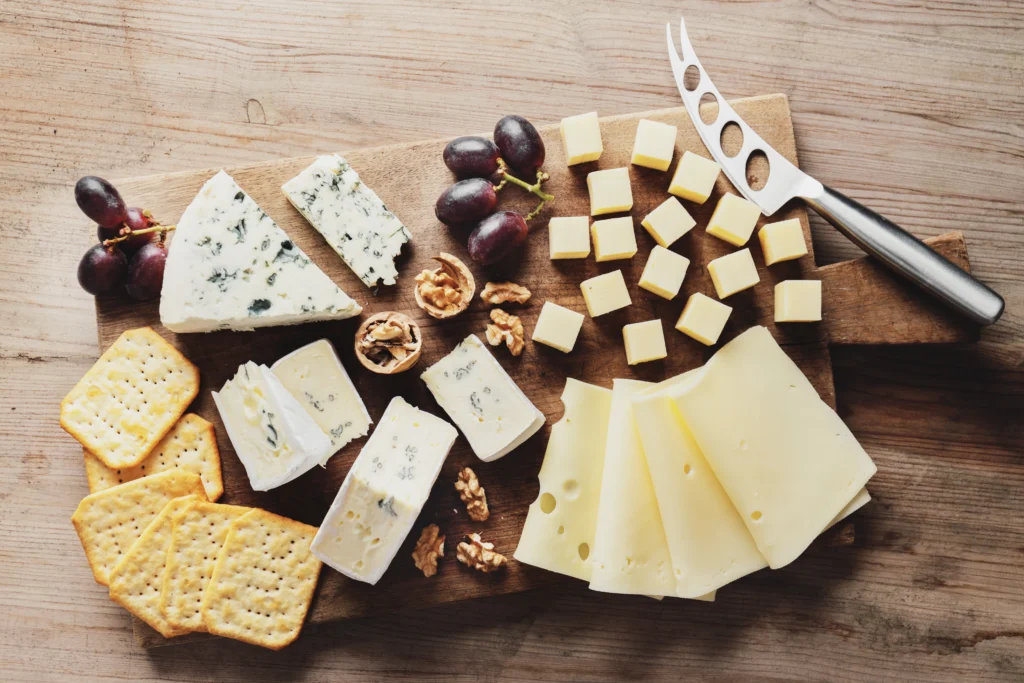
France is home to some of the world’s most beloved cheeses, with a tradition that stretches back centuries. Whether you’re building a cheese platter, cooking a sophisticated dish, or simply looking for a satisfying snack, understanding the different French cheese types is the first step to appreciating one of the country’s greatest culinary gifts.
Read also: 6 Biggest Cheese Producing Countries in the World
From soft and creamy to aged and pungent, there is a French cheese for every palate, and The Laughing Cow has long been inspired by this rich heritage to bring creamy, approachable cheese to tables around the world.
What Makes French Cheese So Unique Compared to Other Cheeses?
French cheese stands in a category of its own, and it’s not just national pride talking. France produces over 1,000 distinct varieties of cheese, a diversity that no other country comes close to matching. This variety stems from a combination of geography, climate, livestock breeds, and centuries of refined artisanal craft.
One of the key reasons French cheese types are so distinct is the concept of terroir—the idea that the land, grass, water, and air of a specific region impart unique flavors to the milk used in cheesemaking. A cheese made from the milk of cows grazing in the lush pastures of Normandy will taste noticeably different from one made in the volcanic highlands of Auvergne, even if the technique is identical.
France also uses milk from multiple animals—cow, goat, and sheep—across its regions, giving rise to a spectacular range of textures, aromas, and flavors. The country even has an official government classification system called Appellation d’Origine Protégée (AOP), which protects the regional identity of specific cheeses and ensures their authenticity. This dedication to quality and origin is what sets French cheese apart on the global stage.
Read also: Exploring the History of Cheese
Beyond geography, the French approach cheese as a cultural cornerstone. It is served at nearly every traditional meal, treated as a dedicated course (the plateau de fromages), and selected with the same care one might apply to wine. It’s this deep-rooted reverence for cheese that has inspired brands like The Laughing Cow to craft products that carry the spirit of French cheese tradition into everyday life—making it accessible, enjoyable, and always delicious.
The 10 Most Popular French Cheese Types You Should Know
1. Brie
Often called the “Queen of Cheeses,” Brie is a soft, white-rinded cheese with a pale, creamy interior. Originating from the Île-de-France region, it has a mild, buttery flavor with earthy, mushroom-like undertones from its bloomy rind.
Brie melts beautifully, making it equally at home on a cheese board or baked into pastry. It is one of the most universally loved French cheese types and a perfect introduction for those new to French cheese.
2. Camembert
A close cousin to Brie, Camembert hails from Normandy and is one of the most iconic French cheese types in the world. It has a slightly stronger, more pungent flavor than Brie, with a soft, gooey center and a distinctive white mold rind.
Camembert is traditionally sold in small wooden boxes and pairs wonderfully with crusty bread, apples, and cider. Its bold character makes it a favorite among cheese lovers who enjoy a more assertive taste.
3. Roquefort
Roquefort is France’s most famous blue cheese, made exclusively from the milk of Lacaune sheep and aged in the natural caves of Combalou in southern France. It is sharp, salty, and intensely flavored, with distinctive blue-green veins running through its crumbly white interior. Roquefort is one of the oldest cheeses in the world and holds one of France’s first AOP designations. It pairs beautifully with honey, walnuts, and sweet wines like Sauternes.
Read also: Choosing the Perfect Cheese for Your Favorite Wine
4. Comté
Comté is a hard, pressed cheese from the Franche-Comté region in eastern France, made from the milk of Montbéliarde cows. It is one of the most popular cheeses in France by volume and is aged anywhere from a few months to several years.
Younger Comté is mild and nutty, while aged varieties develop complex flavors of caramel, spice, and dried fruit. It melts exceptionally well, making it a staple in French fondues and gratins.
5. Reblochon
Reblochon is a soft, washed-rind cheese from the Savoie Alps, made from raw cow’s milk. It has a distinctive orange-pink rind and a creamy, supple interior with a mild, nutty, and slightly fruity flavor. Reblochon is the star ingredient in the beloved French dish tartiflette, a hearty potato and bacon gratin that has become a winter staple. Its mild creaminess makes it approachable for those who prefer subtler French cheese types.
6. Munster
Not to be confused with American muenster, French Munster is a soft, washed-rind cheese from the Alsace and Lorraine regions. Despite its famously pungent aroma, Munster’s flavor is surprisingly mild and creamy, with a smooth, almost elastic texture. It is traditionally served with cumin seeds or potatoes and is a regional specialty that locals take great pride in. Munster proves that the aroma of a cheese doesn’t always predict its taste.
7. Époisses
Époisses is one of the most powerful-smelling cheeses in France, it was reportedly banned from Parisian public transport due to its aroma. Made from cow’s milk in Burgundy and washed with marc de Bourgogne (a local brandy), it has a sticky, orange-brown rind and an extraordinarily creamy, almost liquid interior. The taste, however, is rich, complex, and deeply savory. Époisses is best enjoyed with a spoon and a glass of full-bodied Burgundy wine.
8. Chèvre (Goat Cheese)
Chèvre simply means “goat” in French, and it refers to the broad family of goat’s milk cheeses that France produces in abundance. These range from fresh and tangy (like Chèvre frais) to aged and firm (like Crottin de Chavignol). Goat cheeses tend to have a bright, citrusy acidity that distinguishes them from cow’s milk varieties. They are incredibly versatile, crumbled over salads, spread on toast, or baked into tarts.
9. Mimolette
Mimolette is one of the most visually striking French cheese types, with its bright orange interior and cratered, grey exterior rind. Originally inspired by Dutch Edam, it was developed in northern France during a period when Dutch cheese imports were banned. It ranges from semi-soft and mild when young (jeune) to hard and intensely flavored when fully aged (vieille). Its bold color comes from annatto, a natural plant-based dye, and its flavor deepens from buttery and sweet to nutty and savory with age.
10. Saint-Nectaire
Saint-Nectaire is a semi-soft, pressed cheese from the volcanic Auvergne region of central France. Made from the milk of Salers cows that graze on rich, mineral-laden pastures, it has a natural grey rind with patches of red and yellow mold and a supple, slightly springy interior. Its flavor is earthy, milky, and gently mushroomy—a reflection of the unique volcanic terroir of the region. Saint-Nectaire is one of the most beloved everyday cheeses in France, enjoyed simply with bread and a glass of local wine.
Conclusion
Exploring the world of French cheese types is a journey through flavor, history, and culture. Each variety tells the story of a particular landscape, a community, and a tradition passed down through generations. Whether you’re starting with a mild Brie or working your way up to the bold intensity of Roquefort, every cheese offers a new experience. And for those moments when you want that unmistakable creamy French cheese taste in the palm of your hand, The Laughing Cow is always ready to bring a little French joy to your day.