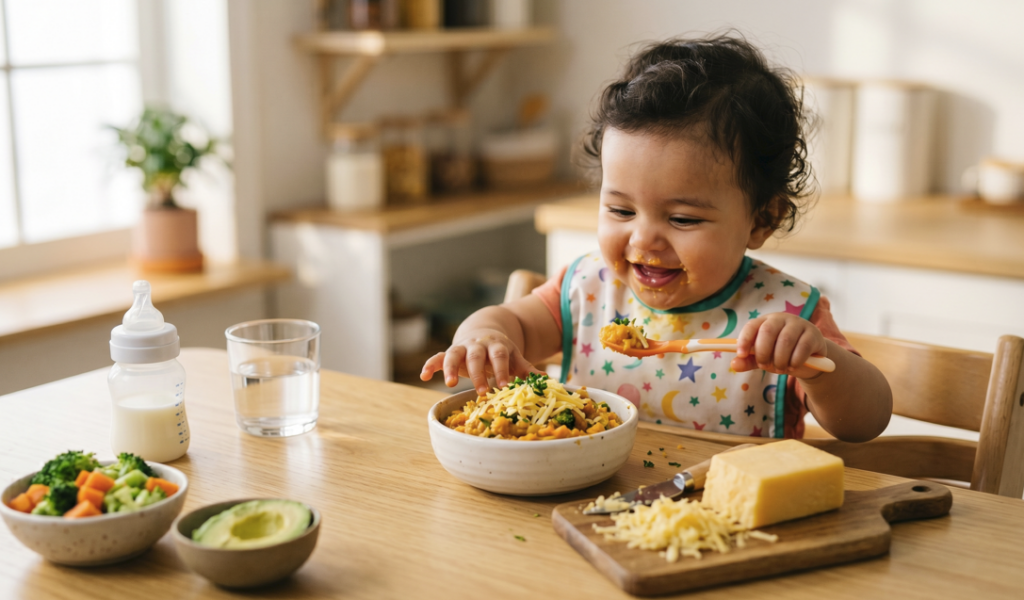
Many parents pour their energy into counting protein and vegetables in the weaning bowl, then treat fat as if it were the enemy. Yet for children under two, fat is among the nutrients most needed to support a baby’s brain growth. Cutting fat from weaning food to “keep the baby from getting chubby” is a common mistake that can affect your little one’s energy adequacy.
Cheese enters this conversation not simply because babies enjoy the taste, but because it delivers fat, dense calories, and calcium in one small bite. For a baby with a tiny stomach that fills up fast, that kind of nutrient density matters. Before talking portions, it also helps to understand how to introduce cheese to babies so the introduction is gradual and safe.
Why Does a Baby’s Brain Desperately Need Fat During the First 1,000 Days?
The first 1,000 days, from pregnancy to the second birthday, are the fastest period of brain growth in a human life. During this phase, nerve cells form large numbers of new connections every day, and fat is one of the main materials that builds and wraps that nerve tissue. Certain fatty acids, such as the DHA abundant in breast milk, also play a key role in brain development.
Fat is also the most energy-dense source for a baby. One gram of fat provides about nine calories, more than double that of carbohydrate or protein.
This is why breast milk is so high in fat, and why weaning food does not need to mimic an adult low-fat diet.
Over-restricting fat in a baby risks suppressing energy intake at a time when needs are high. For babies who struggle to gain weight, raising calorie density is often advised, as discussed in foods to support a baby’s healthy weight gain.
What Types of Fat in Cheese Support a Baby’s Brain Development?
Cheese contributes a mix of milk fat, fatty acids, and calcium in the same ingredient. In babies, dietary fat and cholesterol are not the threat they are framed as in adult diets; they are raw materials the body uses to build cell membranes and support nerve function. As long as the portion is reasonable, that nutritional contribution carries real value.
Beyond fat, cheese delivers calcium and quality protein at once. The role of calcium for children’s bones and teeth is explored further in the benefits of calcium for children.
For a baby, that kind of efficiency is far more valuable than volume.
Choose cheese that is soft, easy to mash, and low in salt so it is safe for a baby just learning to chew. A selection guide is available in cheese recommendations for baby, and for amounts see safe and healthy cheese portions for weaning food.
What Percentage of a Baby’s Daily Calories Should Come from Fat?
The share of fat in a baby’s menu under two years is recommended to be higher than for adults, and that is appropriate during the fastest period of growth. Even so, fat should not be excessive, so the baby still has room for foods rich in protein, iron, and zinc. For exact amounts suited to your baby’s age and condition, consult a pediatrician or nutritionist.
The point is not to avoid fat, but to choose quality fat sources.
Fat from breast milk, avocado, vegetable oils, fatty fish, and cheese is far better than fat from fried or ultra-processed snacks high in sugar and salt, which are not advised for babies. Cheese can be a practical way to raise the calorie density of weaning food without adding the volume that often fills a baby up too quickly.
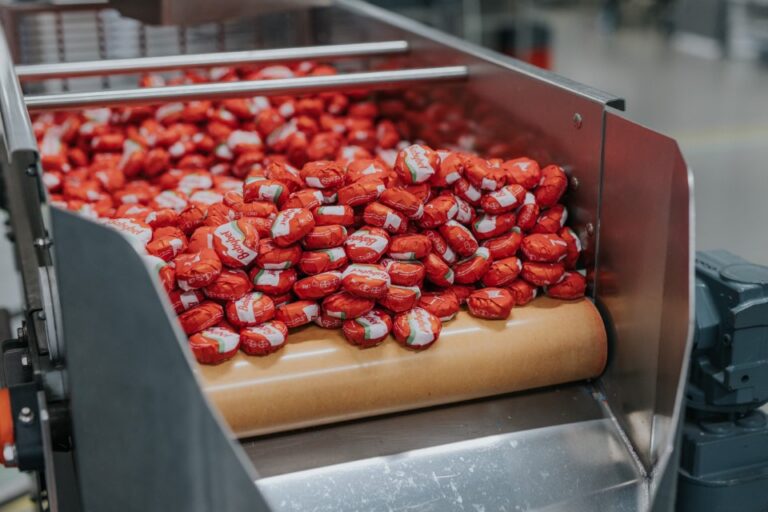
Treat cheese as a complement, not a replacement for the main fat sources from breast milk and other fresh foods. For a serving idea, see the high-protein smoothie bowl recipe with Belcube cheese.
Start with One Spoon of Cheese
Fat is not the enemy in weaning food; it is an essential building block for a baby’s brain and energy during its fastest period of growth. As long as the source is good and the portion stays within the recommended range, fat deserves enough room in your little one’s bowl.
Cheese fills a gap parents often miss: dense calories, calcium, and fat in one small bite that babies readily accept.
Start with a single spoon of soft cheese mashed into porridge, then watch how your baby responds before adding more.